Where can an inbox handover fail?
Choose the closest situation to see which part of the guide to inspect first. You can change your answer at any time.
Quick guide
Three checks before making a change
1Who owns the next reply?
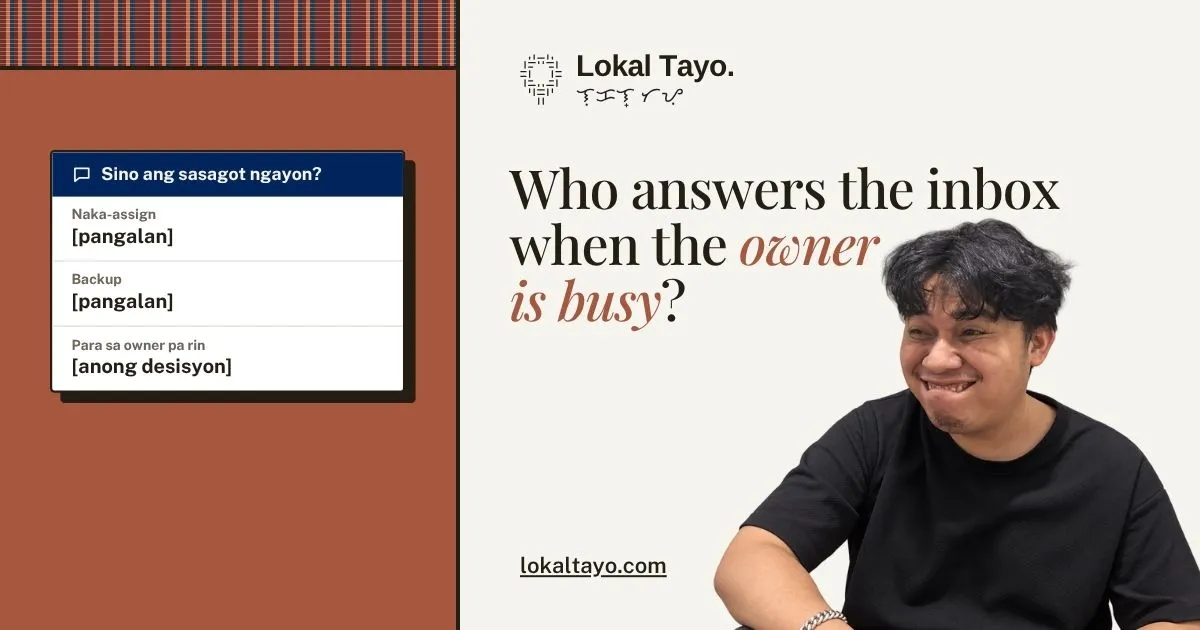
An inbox needs a named person for each coverage period, plus a backup when that person is unavailable. “Everyone checks messages” can make it unclear whether someone else is already handling an inquiry.
Agree which questions the responder can answer and which need the owner. Give the responder access to current services, hours, and booking instructions so routine inquiries do not depend on interrupting work at the counter.
2What belongs in the handover sheet?
| Field | Example entry |
|---|---|
| Conversation reference | Internal reference; avoid unnecessary personal details |
| Current status | New, waiting, assigned, or resolved |
| Question | Availability for a stated service |
| Information already supplied | Hours and inquiry instructions |
| Next owner and action | Assigned person checks availability |
| Follow-up time | A realistic time agreed internally |
Keep the sheet somewhere the authorised team can find it. A conversation should not be marked resolved simply because one message was sent; define what completion means for that request.
3How can you stop inquiries getting lost between shifts?
At handover, review unresolved conversations together or leave a clear note for the next person. Flag promised callbacks and requests that need a decision. At the end of the day, check whether any new inquiry lacks an owner.
Illustrative exampleNot a client audit
A repair shop hands over an open question
A repair-shop assistant sends directions but leaves a pricing question for the owner. The handover records both facts. The owner can continue from the unanswered question rather than asking the customer to repeat the whole conversation.
What to check
Your worksheet and first action
Mark each check correct, needs attention, or not sure. Your answer stays on this page and is not sent to Lokal Tayo.
This worksheet is a decision aid. Confirm facts with the person responsible for the business before changing public information.
How can you put this into practice?
Use confirmed business information and keep a short record of what you changed and rechecked.
-
Assign coverage and a backup.
Name the responder for each actual coverage period, the backup, and which decisions still require the owner.
-
Record the next owner for open inquiries.
Give each open conversation a status, responsible person, unanswered question, and realistic next action rather than leaving it unassigned.
-
Review unresolved conversations at handover.
At handover, review promised callbacks and waiting requests; close only the items that meet the team's agreed completion condition.
Help with implementation
When discussing social media management, agree who handles inquiries and what remains your team’s responsibility. The business quick-reply templates help keep common answers consistent.
What is your next step?
Need to clarify who handles inquiries generated by your Facebook content?
Talk to Lokal Tayo about a Facebook content plan built around your actual services and customer questions. Start with the part you want to make clearer; agree the work and scope before deciding whether to proceed.
On the contact form, choose “Social media marketing and management”. Share the business name, area, and issue when we get in touch.
The conversation can cover
- Assign coverage and a backup.
- Record the next owner for open inquiries.
- Review unresolved conversations at handover.
Frequently asked questions
Do we need someone online all day?
Set coverage that matches your capacity and communicate it honestly. The goal is a clear, dependable process, not a promise of constant availability that the team cannot meet.
What if two staff members answer at once?
Agree an assignment rule and check conversation status before replying. Use appropriate platform permissions and team procedures rather than sharing the owner’s password.
Sources and method
The worksheet and examples in this guide are original editorial tools. They do not claim measured customer results or a surveyed market benchmark.
Prepared from the stated sources where applicable and an original editorial worksheet. No first-hand client test, professional review, or measured conversion improvement is claimed. Examples and numerical illustrations are labelled beside their use.